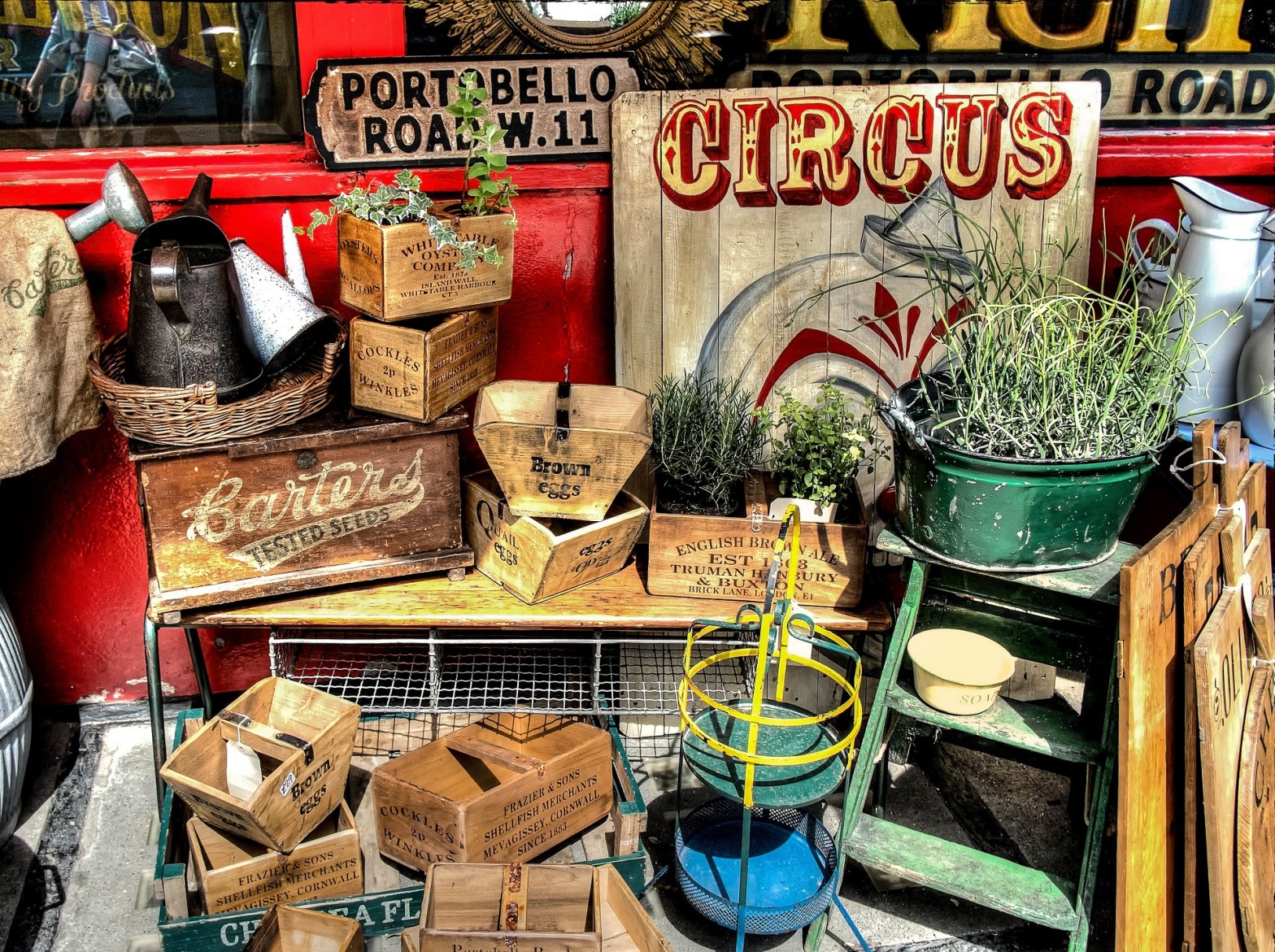
Portobello Road Market started in the 19th century and became one of the largest street markets in the world. Here we look at what it was, and what is has become.
Portobello Market began as a simple fruit and veg stall in 19th century London, down a quiet country road called Green Lane in Notting Hill. There was a farm nearby known as Porto Bello Farm which the market took its name from. As Notting Hill grew in popularity, so did the market. In 1927 the market was extended to open 6 days a week, by the 1940s it began to attract London’s antique sellers, and wealthy Londoners were lured away from the shops of Paddington to the open-air market stalls. The market slowly grew to over 1500 vendors stretching 2 miles long. It sells everything from antiques (what it’s world-famous for) to art, jewellery, and of course fruit and veg.

Portobello Market was revived in the 1980s after Notting Hill rose from a poor, run-down area of London into a wealthy hot-spot where young trendsetters spent their time and money. With the fashionistas moving in, along came more vintage clothing market stalls. In the 90’s the market famously featured in the 1999 movie Notting Hill, starring Hugh Grant and Julia Roberts. This brought even more tourism to the area. Accommodation near Portobello Market still books up fast thanks to it’s part in the movie, and many visitors enjoy the variety of restaurant and hotel dining offers from a desirable selection of venues.
It’s vibrant atmosphere, street performers and unique market stalls keeps visitors coming back. Tourists and locals alike can experience something new each time they visit; go to Talbot road for food, try the Westway area for fashion, or Elgin Crescent for the antiques. Amidst the hustle and bustle, visitors can escape the busy roads for one of the popular restaurants nearby, and there are many hotel dining offers to be had in this popular, colourful borough.
After years as a London institution, Portobello Road Market remains one of London’s must-see destinations.
 West London Explorer